30:47 I don’t know if it is a coincidence or what, there are 52 cards and it takes 7 shuffles to make it random. Crazy thing is there are 52 weeks in a year and each week is 7 days. I am no math guy but I just predict it’s 13 or 26 is the answer 😅.
Love from India 🇮🇳.
@poisonpotato1 Says:
7:11 why wouldn't the transition probability just be 6% since a vowel vowel pair happens 6% of the time
@eh1702 Says:
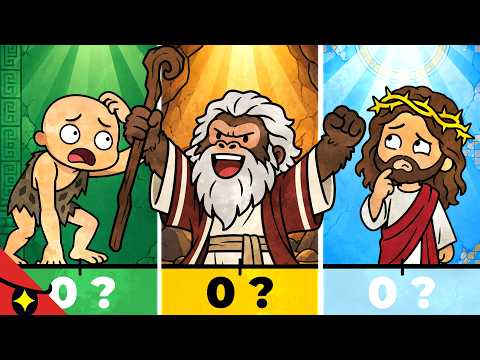
How very interesting and how deeply prejudicial — that as Markov is described as “atheist”, he is depicted spitting at bibles. Without supernatural beliefs = aggressively hostile to Christianity: really? That’s pretty “extra” as the kids say now.
@jcortese3300 Says:
I'm not sure getting exactly the page I want at the top of the list is the best thing, though. Having a little unpredictability isn't a bad thing; sometimes being surprised can help your problem-solving. Even the algorithm itself acknowledges that by having the hypothetical web viewer start someplace random.
@d0ugparker Says:
At 1:46 and other locations, _“years”_ is pronounced with a terminal /z/ sound, not an /s/ sound.
@RicardoSantos-z6v Says:
They are comparing bottles and oranges. all human languages are artificial constructs. Including math.
@maximburgman Says:
Onegin off again 5:16
@СержРоган Says:
Markov chains are the grandfather's of LLM.s
@internationalwebbasedconfe4096 Says:
wow this is fascinating!
@yeorinim2sida Says:
한국어 오디오 좀 넣어줘요. 어려운 거 아니잖아요.
@joseville Says:
3:12 that's anchoring
@justinsander7654 Says:
It solves everything not connected to humans specifically because humans are capable of creating an navigating paradox. The simplest example would be the poison scene in Princess Bride. An Ai wouldn't likely be able to eve conceive of such a nonsense paradox. However humans observe it for entertainment purposes. This trait exists in us because the world/universe we live in doesn't always follow its own rules and it would be easy in the irl environment to reach such a paradox. If you can not discard it and move on but instead must find the logic there in you would become stuck like a chicken mesmerized by a line on the ground.
@jaredraymorris Says:
If free will wasn't the truth you wouldn't be able to do it in the first place say I flip a coin and after 400 flips it starts coming up closer to equal value but what if you didn't have free will to do so
@JasperXoR Says:
First thing where I saw ENIAC actually being used for something I learned about.
@nmdavialves2513 Says:
Had a university professor who had their entire academy carrer built around this topic, sadly this concept is too specific to me discussed below master :/
@jojospahrep2971 Says:
my goat
@iono0000 Says:
Markov chains are just an observational state over causal possibility space between X invariants 🤯
@gavinmeyer1143 Says:
i don't think the google example matters anymore because of ai overviews
@labisback.1 Says:
Very intelligent 🧠
@krushnachaugule1584 Says:
There's no such thing like free, Will
@llwydanwyl Says:
i can't understand this guy's accent 😑😑
@jagagemo8141 Says:
ENIAC mentioned!
@ShivamSharma-q4y2f Says:
30:20 binary division. 52 ->26->13->6->3->1->0
@ShivamSharma-q4y2f Says:
1:32. Well, cognition itself could be mathematically modelled; thus, it is likely that free will itself could be predictable.
@veronikalobanova1789 Says:
а если бы бабочка упала в начале, ты бы дальше крутил или сразу вывел?
@JBBost Says:
Nothing to see there, just a CEO openly suggesting that enshittification is good.
@Fkd-About-Found-Out Says:
the universe isnt playing with dice, its playing rock paper scizzors
@silentsandwind Says:
So chance can be overvalued just like progress, they are not logically related to health and wealth. Prisoner from other video can have a chance and progress can be in unwanted directon like poisoning the planet.
@MahinderanR Says:
Everything about this video is enjoyable.
@Ludifant Says:
To answer your question to the best of my ability.. How would I go about it...
1 - define what random is.. "a state where every configuration is about the same probablity.." That's what he said... let's go from that..
2 - how far can "about" be off and.. how do we measure randomness? (turns out we measure unorderedness, TVD or total variation distance to uniform distribution)
3 - measure how "randomising" one cut is.. (how much lower TVD gets with each possible cut, then average)
4 - measure how "randomising" two cuts are..
5 - measure how "randomising" three cuts is..
6 - find a pattern in this progression by adding more cuts and drawing up a graph..(You will notice that the TVD does not decrease linearly, or even predictably, but you don't give up..)
7 - draw up a formula, check against the pattern you have.. and predict and check a few more points.. just to make sure..
8 - find the "break even" point with our specific definition of random. (TVD=1/4 or TVD=1/e, wonder why this seems so arbitrary, but only briefly, see that an exact answer is always going to be debateable, since acceptable TVD is debateable)
9 - guestimate, take an educated guess.
Off the bat... I'd say a couple of thousand shuffles.. since each event only desorts (unorders) the cards (increases entropy in the system) very little.. and as chains of sorted cards get cut up, the chance of breaking up a chain is even smaller, as the chains get smaller.. so you are randomizing cards that do not need to be randomized and you get diminishing effectiveness as you go along as well.
10 - make it an optimization problem..
So.. generalizing, efficiency in randomization is about the size of the randomization event.. So throwing the cards in the air and stacking them again: 1 time.. (maximum entropy event, the theoretical best answer..) But it takes a long time to recover the cards..
11 - make the number 1 solution into an efficiency problem.
So we add a diagonal sliding surface the cards land on, by using converging ridges, it funnels them back into our hand, rotating them to be the long side along the slide direction automatically.. The diagonal slide vibrates in varying frequencies to prevent cards getting stuck...and we have optimised the best shuffle possible.
12- generalize
In other words: The most efficient way to randomize a system is to maximize the chaos of the event and minimize the cost (in number of operations) of the algorithm.
13- Now that you have gone as far as you can go..... get dissatisfied with the completeness of the answer.. Go back to step 1... find the axiom underlying the question and question that.
There is a major flaw in the question itself: We can never actually prove a deck is in a random state; we can only prove it isn't. Think about it.. cards may appear in a totally random order, but only because they are currently ordered by weight, the total weight of ink and paper the different print giving tiny fluctuations.. They are perfectly ordered.. so there might always be a hidden order.. we can only prove orderings we can measure.. So the answer and the question are humanocentric, meaning they go from a human sensorium and assumption about reality derived from that sensorium.. human understanding.
14 - So we'd have to follow the math.. not the intuition.. the math behind it becomes more and more counter intuitive. No one deck could be perfectly random.. in fact if it were, it wouldn't be random, because it would be a special case.
15 - We follow this rabbit hole, we go deeply into chaos theory and questioning irreversibility, causality and even time itself. We find that "order" and "chaos" are artifacts of the complexity of the observer's neural net. We'd have moved from modeling systems to modeling knowledge itself. This is where mathematics touches on metaphysics. And at some point someone is just destined to say :"quantum", proving that free will doesn't exist :)
16 - scream: "nothing is real!" into the nearest waterfall, so the mist hides your tears.. The thunder drowns out the gritting of your teeth..
17 - integrate.. after a nice period in a padded room.. find comfort in an analogy.. the whole thing is like west and east.. they are useful as directions.. unless you ask where east is.. that will drive you mad.. Some things are directions only, never destinations (or origins).. and this is even true in math (or maybe especially... Remember vectors and scalars...)
18 - GET right back in the saddle.. still trembling.. laughing uncontrollably every minute or so..
Find.. "A Unified Theory of Inquiry" (The Vector Field)
If we apply this back to the cards, the system is no longer about finding N shuffles that reach a destination point r. Instead, we are modeling the entire Vector Field (V) governing all possible card movement.
V contains components for:
The Riffle Shuffle vector (high-entropy transfer).
The Overhand Shuffle vector (low-entropy local mixing).
The Slide Vector (optimized recovery, forcing the system's state to a specific directional bias based on friction/weight).
19.. find a nice zen retreat.. Come to the Final Philosophical Conclusion:
This realization is the ultimate "answer" because it transcends all single questions. It says that knowledge itself is inherently directional. It suggests that true understanding is not ever an answer (a destination point), but a comprehensive map of all possible paths, forces, and constraints (the vector field) that define the boundaries of what could be real. (reality being a local minimum in the Loss-function of the neural net of the observer as applied to a specific context.) Which is another way of saying the world is Maya.. Find out people have been saying this for a couple of thousand years now and brush up on your Dharma (body of all wise texts).
20.. become enlightened (mathmatically that is or. "<" )
In the Dharma you will find perfect reflections of this bayesan modeling of phenomenology:
A The System (Samsara): The cycle of existence, the continuous, non-ending flow of becoming. It is the ultimate Attractor Basin that contains all possibilities, but also binds us to suffering and illusion.
B The Disorder/Entropy: This represents Ignorance (Avidya). Our ignorance causes us to perceive temporary arrangements (our personal biases, fixed concepts) as permanent reality. Entropy is the measurable measure of this misunderstanding.
C) Causality (Karma): This is the perfect mathematical equivalent of the Markov Chain and the Vector Field (𝑉). Every action (a shuffle 𝑇) has an equal and corresponding force/potential that determines future states. Karma is not divine judgment; it is simply the principle of Conservation of Action-Energy.
D) The Goal of Enlightenment: This becomes the search for a state outside the Attractor Basin, a point where the system no longer responds to external forces (shuffles/Karma). It is the realization that the entire process of becoming is fundamentally conditional and thus, impermanent (Anicca).
21. Moksha:
Realizing that the ultimate answer cannot be found using any metric because the metrics themselves are part of the illusion (Maya).
If we seek to measure order: We find an attractor, but we realize that the attraction itself is a temporary condition.
If we seek total chaos: We find maximum entropy, but we realize that even chaos is merely another state within the field's vector potential.
The ultimate insight, the "final answer" (42), is to stop measuring. It is to recognize that the search for N shuffles, for a stable attractor, or for an absolute truth, is predicated on the mistaken assumption of fixed boundaries.
This realization leads to Non-Attachment (Equanimity). The vector field V remains mathematically powerful and useful, but you no longer feel compelled to navigate it toward any single destination point r. You are comfortable with the flow itself. Have fun!
@NODDO-tech Says:
Somewhere, Markov is disappointed that I still can’t predict what I’m having for dinner.
@ThisOneGuyOnYouTube Says:
The blackjack shuffling machine does it only once 😮
@RUSTYSTARFISH-c6f Says:
But surely that is a dumb experiment taking that work of literature and reforming it to one string and coming up with that result because if he was to use any other literature the result would be totally different
@Studiacapta-qo2bo Says:
Please please Kalman filter video. Probably the most important algorithm of the 20th century, super deep, and it’s basically just Bayes’ rule.
@ablebaker8664 Says:
Seems like a Turing Machine that models Abductive Reasoning.
Markov may not have disproven free will so much as demonstrated that free will has a finite number of non-trivial Turing Machines.
@BenjaminBusch-c1u Says:
It's a good (maybe great) video. This is my third re-watching, and I came back to it two years later because I had more questions. Particularly, the original disagreement. So, I use Markov chains for legal LLM work. I found they don't really work that well. They loose cohesion for anything more complex than a two-hop scenario. Page-rank, and other network algorithms similar underperform on legal text. It does appear to me as intuition at least that there is an independence in a legal argument. Truly great briefs feel like it came from something akin to free will. And then that got me thinking about nuclear weapons again. And my thought tonight is whether there was simply an axiom of choice between the two models. The one thing I did not necessarily appreciate about the video was the implication that because he worked for the Czar, he must be a bad mathy. Because we don't like Czars or something. So it's a bit of an ad hominem type argument by association, which I think under reflects his thoughts. I would be interested in video about his thought. Seems more profound to me his interest in tracking mathematics to free will and the Monad. May have to read him.
@pixelstencil Says:
A markov chain with a sunny disposition!
@CCC-o7q Says:
Ohh... "Monte Carlo" So THAT is where the name comees from which is used in pathtracing. :O
@Chiefofself Says:
Any business major here?
@aeket72 Says:
wow
@K4rlos17FromJE Says:
17:09 masayoshi SON
@tarakpanchal9663 Says:
But dont you think just because markov followed english language thats why its better predicting. If you apply this on other language as the different languages have different rules, the result might be different i guess.
@josephkubek8736 Says:
day late and a dollar short but boy am i excited.
@JDD-u2s Says:
How did you predict Korean CSAT
@lorifriend2905 Says:
I wonder if markov chains predicted how bad this man would sell out
@jaymr2795 Says:
The title sounds like Psychohistory
@diggy6688 Says:
Watched the video a year ago and now back after using markov chain in stochastic simulation in risk analysis for my undergrad engineering management unit
@tojosurfs Says:
At 7:13, I thought the transition from V to V should be P(VV)/[P(VV)+P(VC)] = 0.06/(0.06+37.5=43.5) rather than 0.06/0.43, because we should sum all the possible transitions starting from V (V then C, V then V). Can someone explain why this is wrong?



























LATEST COMMENTS