TV
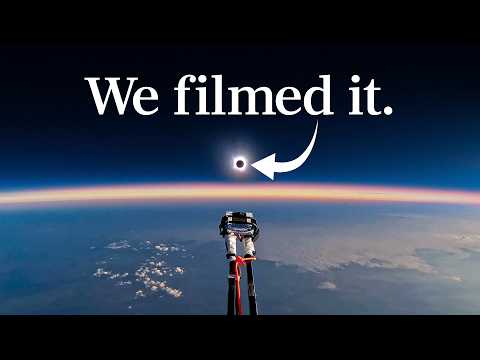
What If A Star Explodes Near The Earth?

What If A Star Explodes Near The Earth?

????

People have witnessed supernovae for millennia, but what threat do they pose to life on Earth? This video is sponsored by Brilliant. You can get started for free, or the first 200 people to sign up via https://brilliant.org/veritasium get 20% off a yearly subscription. ??? A massive thanks to Prof. Hans-Thomas Janka for helping us with the physics of supernovae and GRBs. A massive thanks to Prof. Brian Thomas for all of his help with the terrestrial effects of supernovae and GRBs. This video would not have been possible without them. Also thanks to Dr. Luke Barnes for his initial help with the literature search. Hydrogen bomb vs Supernova fact was taken from this great article by xkcd/Randall Munroe – https://what-if.xkcd.com/73/ (based on the calculation by Andrew Karam, 2002) Cosmic bubble footage from https://www.cfa.harvard.edu/news/1000-light-year-wide-bubble-surrounding-earth-source-all-nearby-young-stars Neutrino driven SN explosion simulations from https://iopscience.iop.org/article/10.1088/2041-8205/808/2/L42 ??? References: Melott, A. et al. (2019). Hypothesis: Muon radiation dose and marine megafaunal extinction at the End-Pliocene supernova. Astrobiology, 19(6), 825-830. – https://ve42.co/Melott1 Thomas, B. C. et al. (2016). Terrestrial effects of nearby supernovae in the early Pleistocene. The Astrophysical Journal Letters, 826(1), L3 – https://ve42.co/Thomas1 Melott, A. L., & Thomas, B. C. (2019). From cosmic explosions to terrestrial fires?. The Journal of Geology, 127(4), 475-481. – https://ve42.co/Melott2 Fields, B. et al. (2019). Near-Earth supernova explosions: Evidence, implications, and opportunities. arXiv preprint arXiv:1903.04589. – https://ve42.co/Fields1 Thomas, B. C., Atri, D., & Melott, A. L. (2021). Gamma-ray bursts: not so much deadlier than we thought. Monthly Notices of the Royal Astronomical Society, 500(2), 1970-1973. – https://ve42.co/Thomas2 Melott, A. et al. (2004). Did a gamma-ray burst initiate the late Ordovician mass extinction?. International Journal of Astrobiology, 3(1), 55-61. – https://ve42.co/Melott3 Firestone, R. B. (2014). Observation of 23 supernovae that exploded less than 300 pc from Earth during the past 300 kyr. The Astrophysical Journal, 789(1), 29. – https://ve42.co/firestone1 Janka, H. T. (2017). Neutrino emission from supernovae. arXiv preprint arXiv:1702.08713. – https://ve42.co/Janka1 Janka, H. T., & Hillebrandt, W. (1989). Neutrino emission from type II supernovae-an analysis of the spectra. Astronomy and astrophysics, 224, 49-56. – https://ve42.co/Janka2 Janka, H. T. (2017). Neutrino-driven explosions. arXiv preprint arXiv:1702.08825. – https://ve42.co/Janka3 Karam, P. A. (2002). Gamma and neutrino radiation dose from gamma ray bursts and nearby supernovae. Health physics, 82(4), 491-499. – https://ve42.co/Karam1 Melott, A. L., Thomas, et al.. (2017). A supernova at 50 pc: effects on the Earth's atmosphere and biota. The Astrophysical Journal, 840(2), 105. – https://ve42.co/Melott4 Ludwig, P., et al. (2016). Time-resolved 2-million-year-old supernova activity discovered in Earth's microfossil record. Proceedings of the National Academy of Sciences, 113(33), 9232-9237. – https://ve42.co/Ludwig1 Gritschneder, et al. (2011). The supernova triggered formation and enrichment of our solar system. The Astrophysical Journal, 745(1), 22. – https://ve42.co/Gritschneder1 Motizuki, Y., Takahashi, et al. (2009). An Antarctic ice core recording both supernovae and solar cycles. arXiv preprint arXiv:0902.3446. – https://ve42.co/Motizuki Zucker, C. et al. (2022). Star formation near the Sun is driven by expansion of the Local Bubble. Nature, 601(7893), 334-337. – https://ve42.co/Zucker1 Hirata, K. et al.(1987). Observation of a neutrino burst from the supernova SN1987A. Physical Review Letters, 58(14), 1490. – https://ve42.co/Hirata1 ??? Special thanks to our Patron supporters: James Sanger, Louis Lebbos, Elliot Miller, Brian Busbee, Jerome Barakos M.D., Amadeo Bee, TTST, Balkrishna Heroor, Chris LaClair, John H. Austin, Jr., OnlineBookClub.org, Matthew Gonzalez, Eric Sexton, John Kiehl, Diffbot, Gnare, Dave Kircher, Burt Humburg, Blake Byers, Evgeny Skvortsov, Meekay, Bill Linder, Paul Peijzel, Josh Hibschman, Mac Malkawi, Mike Schneider, John Bauer, jim buckmaster, Juan Benet, Sunil Nagaraj, Richard Sundvall, Lee Redden, Stephen Wilcox, Marinus Kuivenhoven, Michael Krugman, Cy 'kkm' K'Nelson, Sam Lutfi ??? Written by Petr Lebedev & Derek Muller Edited by Fabio Albertelli Animation by Fabio Albertelli, Jakub Misiek, Alex Drakoulis, Ivy Tello, Mike Radjabov, and Charlie Davies Filmed by Derek Muller Additional Research by Kovi Rose & Katie Barnshaw Video/photos supplied by NASA, ESA, Pond5, and Getty Images Music from Epidemic Sound & Jonny Hyman Produced by Derek Muller, Petr Lebedev, and Emily Zhang

Advertisement

LEAVE YOUR COMMENT

LATEST COMMENTS

@mrloop1530 Says:
0:19 Do not try this at home
@CeeTee-12345 Says:
Here's the short version, you won't want this to happen... LOL
@AditsyaArvind Says:
Well there goes another species because of space phenomena
@Bunnygers-o8d Says:
Fire
@JKJohnson-rk8ic Says:
Nothing significant happens unless the star that explodes is ours.
@cxanadu Says:
the humble neutrino
@astrafaan Says:
Don't need the sensationalism for supernovas to be explained tyvm.
@3way270 Says:
We'll probably have a belt like Saturn from all the debris orbiting our parehelian. But knowing the folks on this planet here they a turn that into fuel or building something crazy with it by taking the broken rocks and studying it for scientific research lol 😆
@быджусловјартел Says:
The "renewables" nut jobs would be out in full force, offering tax breaks on new panels to capture the energy from the supernova.
@SBiswas-j3g6k Says:
How wonderful a star's life will be depends on how big it is. The bigger it is, the faster it will run out of fuel and die. That's why the deaths of big stars are more impressive than the deaths of little stars like our Sun. A supernova is what happens when a big star dies in an explosion. People thought that a supernova could only happen once in the life of a big star.. Astronomers have recently discovered a star that has exploded twice, suggesting it may have died twice. On July 2 a group of astronomers published a report in Nature Astronomy that revealed a supernova approximately 300 years old in a completely new way. This image reveals that some dead stars can still be seen with the double explosion...
@scottlanghorst1483 Says:
I got to Witness a Star Supernova. It was Red at first, so I thought it was the Planet Mars. It turned from Red to White and it Exploded then Shrank, leaving Darkness in its Place!
@StrangeWorldArchives Says:
The way Veritasium explains such massive cosmic events is always mind-blowing! 🤯 The visual storytelling and script structure in this video are absolutely top-tier. I got chills at [06:52] when you highlighted that the humble neutrino—a particle with almost no mass—is responsible for the largest explosions in the universe. It’s crazy to think that something so small triggers a supernova! 🌌 The balance between astrophysics and engaging narrative is perfectly executed. Has your team ever considered diving deeper into the mystery of hypernovae or specific Gamma-Ray Bursts in a standalone video? Keep up the incredible work! 🚀🔥
@TechDissectOfficial Says:
3 years later, this discussion is even more relevant. The irony that a near-massless particle..." The irony that a near-massless particle (the neutrino) is the primary engine behind a supernova's immense kinetic blast is one of physics' greatest jokes. But here’s the real cosmological paradox for the engineers here: If 99% of a supernova's energy escapes as neutrinos before the photons even break the surface, and our multi-billion dollar optical telescopes (like JWST) only capture the delayed electromagnetic 'aftermath', how much of the early universe's explosive history is our optics simply blind to? Are we building $10 billion eyes to look at the wrong spectrum?
@DJMcGuitarTea Says:
Sorry but that'd obviously bollocks.. wouldn't it's power completely eradicate anything else? Causing perpetual daylight and blinding everything with eyes?
@GuyIncognito-d9d Says:
just wear sunglasses
@Zadok-ev7ih Says:
YO THANK YOU BRO THIS IS SPACE PHYSICS IGCSE EXTENDED REVISIONM RIGHT HERE
@YvesSimard-o1g Says:
Which Neutrino Observatory did you work in? I spent a lot of time at the Sudbury Observatory SNO and was there through most of its construction.
@lavanyam9633 Says:
17:53 so a supernova made a big mistake giving us life 😅
@jackfranconi Says:
this is my favorite veritasium video.
@Rudeus3-y5i Says:
0:37 still not as bright as discord light
@hansruiter-jo4ke Says:
As usual perfectely clear and understandable explained. 👍👍
@Som_moe Says:
Thank you for this level of information, imagine how much one would have had to pay to be able to get information like this in the older days
@bmwm3cs Says:
A long time ago in a galaxy far, far away....there were trillions of Neutrinos doing nothing : ()
@dejongdon Says:
Did this channel get purchased by private equity? Is that why the content took a big dump lately?
@Rayneonpawzzzz Says:
hypernovas are WAAAY more powerful than supernovas
@metuka12 Says:
Thanks Veritasium. Great videos
@71samrath Says:
Love it
@ToastedIdea Says:
Kaboom probably
@Slinkyreal Says:
It’s going to become a black hole after it dies
@HyungnamGu Says:
Failed Supernovas: A star (e.g., around 13 solar masses) may collapse directly into a black hole without a traditional, bright explosion, leaving only a lingering infrared glow. Failed Shock Wave: When a massive star's core collapses, a shock wave is usually launched. If the shock fails, the star’s envelope falls back onto the core, creating a black hole.
@HyungnamGu Says:
The bomb is much "brighter" (more intense energy flux) due to the immense proximity, despite the supernova being the larger total energy release.
@Jobseekr_Music Says:
this woulud never happen would it?
@bagger2222 Says:
tried to listen to this with headphones during cooking, but there's just too many 'illions to follow.
@Parayogi Says:
not supernova, micronova if the sun is at the middle of a low-density bubble that has been blown outwards guess where it's been blown outwards *_from_*
@hypotheticallyscience Says:
My favorite scientist right here! (;
@SoirEkim Says:
When you say it’s would be a billion times less bright does that mean we are including the full spectrum or just the visible part?
@BachertMelman Says:
That 8th house Full Moon energy is no joke! I had a huge breakthrough about trust issues with my partner right on the 2nd. Finally feeling ready to dive deeper instead of running away 🏹✨
@MatiasWorld-l5u Says:
If thanks to those explosions We and the solar system are around, then let's have more...
@nexxsubject9931 Says:
I love how he says it never happened but we did have some close calls. This MF woke up cranky professors at 4AM XD
@RougeTraveller Says:
Great descriptive and educational video. Fascinating subject! Thank you 😊
@GabrielSouza-sk6ne Says:
I'm envious of Kepler and people of his lifetime for the opportunity of seeing it
@Peter-PiperYT Says:
This video is incredible
@CryptoNewsTV Says:
Side note, with iron, is this why humans have their prime of life around their 30 - 40s? how can we reduce our internal iron and restart this process?
@johnkritchey8445 Says:
WHAT IS NEAR? HOW DOES IT AFFECT EARTH AT VARIOUS DISTANCES? WHAT TYPE OF STARS DO WHAT TYPES OF DAMAGE
@manuelkumli5393 Says:
Who tf came up with this
@lylu-e9k Says:
博主做的太棒了,希望能多更新相关的视频,这实在是太有意思了
@adriendecroynz Says:
How do massless things create pressure?
@juanchoja Says:
At 8:38. Amazing to think that in 1604, when Kepler saw that Dwarf Star that caused a Supernova 20,000 light years away was an event that happened 20,000 years ago during the ice age. That supernova is already 20,000 years old.
@Pfestive Says:
I think this video went off the deep end talking about neutrinos. I don't think any of that is properly observable or true, and having worked as he claims in a neutrino observatory and never having observed, I'm not surprised. A lot of this just becomes totally whack science fiction. no3 is more likely to be changed from a forest fire than a super nova, I find that claim to be totally insane.
@DistractedDaisy Says:
Great video but I kept waiting to hear hecklefish chime in!

More Science Videos