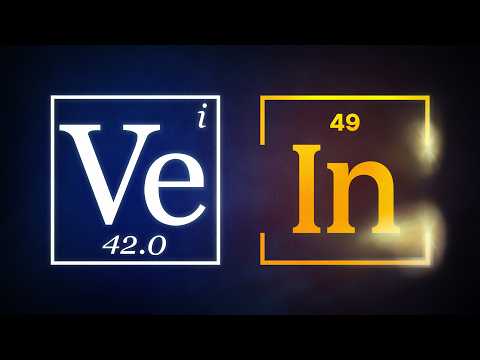
The most dangerous problem in math
Advertisement

LEAVE YOUR COMMENT

LATEST COMMENTS

@veritasium Says:
A number of people are asking why this problem is “dangerous”. It’s described as dangerous because its difficulty has defeated the world’s greatest mathematical minds for generations. Paul Erdos, a famous mathematician, said, "Mathematics is not yet ripe enough for such questions." Jeffrey Lagarias called it "an extraordinarily difficult problem, completely out of reach of present day mathematics". The problem is so maddeningly difficult, mathematicians are warned to stay away from it. Watch the full video for more context: https://www.youtube.com/watch?v=094y1Z2wpJg
@studporkchop Says:
Of course this is the case. It’s set up to be the case.
@ShakthiBrothers-z5p Says:
7 for ronaldo
@cherrychan-wu4bv Says:
Zero is never goes to a loop
@cherrychan-wu4bv Says:
Zero is never goes to a loop
@MrPurpleReal Says:
Pick a number Ok 5 7 good choice Um are u deaf?
@kevin_rr_j_brother Says:
22 i'm right
@RamadeviPotu-t5l Says:
Collatz conjecture
@benlip2315 Says:
0
@abrahamlincoln1600 Says:
Gosh,the vibes are so immaculate in this era, you’d think the biggest risk on these sets at the time, were the actors ACTUALLY falling in love with eachother.
@JustinZacharyCatapang Says:
My Head hurts
@Kirk-m2k Says:
Its impossible to break this loop with 3
@Xenopic Says:
There is no way to not get there, no matter what numbers you use. First, dividing can’t lead to 0. So if you get 2, you’re done. Second, if you use a super high number, it will take a whole long time to get to the loop OR you will find a different loop that just brings the number to the same 3 values in a higher place. Stop creating your problems, it’s meaningless.
@Xenopic Says:
So u made a loop and labeled it as dangerous?
@ankitmurmu-ri4qu Says:
This the solution itself, isn't it 😂 If one doesn't except it, just change the rules, Other thought is that the question itself is wrong😂
@blue5618 Says:
so this challenge's rules can be interpreted as this: 1) add "3" to the list of prime factors, then +1 2) remove all factors of 2 in the new number Start with an odd number, the new number is guaranteed even. Is there ever any pattern where this new number, if all factors of 2 are stripped away, have factors with any relation to the starting number? Starting with an even number just have the factors of 2 stripped away, almost no need to check for even numbers. Knowing how we don't have a defined or "golden formula" to map all prime numbers, and the question being related to prime numbers, I think at best the problem can be estimated by a certain range or assumptions, but not solved
@sandrinebadji4413 Says:
WHAT IF THE NUMBER IS ≡ TO EVEN AND ODD
@Mariol-r4p Says:
This looks easy to me
@alexiosu522 Says:
Lothar Collatz is the name of the person who stated that for any natural number, following these transformations it becomes 1
@intotron-X Says:
You may define the end criterion (4-2-1 loop) also more simple. Eventually you will hit a power of 2, so all further steps keep dividing by 2, until you get to 1.
@Ribbonplayswhite Says:
Me knowing I solved it with a smirk on my face: It’s 3.06 barred or in simpler terms 46/15 if you don’t understand maybe I can make that 3.06 from 46/15 into a number Edit: after looking into it 46/15 is the same as 3.1 or 3.067 which makes the answer look like a toddler can solve it so the answer would be 10.201 which my original answer using the 3.06 method was 10.20 which makes the question solved?
@YITTRIUM_Band Says:
it is dangerous because it makes you fly into a black hole
@山山-y4q Says:
5 + 5² + 5³ + 5⁴ + ... < 6 + 6² + 6³ + 6⁴ + ... < 7 + 7² + 7³ + 7⁴ + ... < 8 + 8² + 8³ + 8⁴ + ... < 9 + 9² + 9³ + 9⁴ + ... Therefore, Legendre's conjecture holds for numbers from primes to numbers less than 1. Given two prime numbers p and q, when p < q, there exists a prime number q such that p < p² < (p+1)² < q. In this case, Legendre's conjecture is rejected, and this is one counterexample. Collatz's conjecture is expressed by the following equation: 7 + 7² + 7³ + 7⁴ + ... < 8 + 8² + 8³ + 8⁴ + ... < 9 + 9² + 9³ + 9⁴ + ... The relationship between prime numbers p and q, p < p² < (p+1)² < q, requires a prime number r such that when p = 1, p < q < r. Furthermore, when p = 1, the relationship p < p² does not hold. Legendre's conjecture does not hold. This is because 1 is considered a prime number.
@saull287 Says:
And is dangerous 'coz...
@nicholasjohnson10011 Says:
So why is it so dangerous?
@IshaniSharma-f9x Says:
Called collatz conjecture
@TheSnoeedog Says:
If your video was titled, "this is the most dangerous terrestrial animal in africa" and just showed a picture of a hippo (without explaining why/how it's so dangerous) would you feel you'd made a good, informative video? Or would you have posted clickbait? I expect better
@KhamphacuocsongTV-CN4.0 Says:
Thanks❤❤❤
@HolaPrevy Says:
Ok now I got why 7 was a good choice...
@MrHeadshotSigma Says:
It's called 3n + 1 Collatz Conjecture
@HungNguyen-bh6ft Says:
That call “3x+1”
@Bladerieedit Says:
u just need to focus ill show u something hard that i learnt 3years ago n→∞lim​i=1∑n​∫0π​∂x∂​ ​k=1∏∞​Γ(k)∇2ψ(x)ζ(k)∮C​f(z)dz​ A “Frankenstein expression” like the one you wrote uses many advanced mathematical symbols from different areas of mathematics. It includes lim for limits, used in calculus to study what happens when a value approaches infinity or a specific point; ∑ (sigma) for summation, which means adding a sequence of terms; ∫ (integral) for continuous summation or calculating areas and accumulated quantities; and ∂ (partial derivative) for measuring how a function changes with respect to one variable. It also uses ∏ (product notation) for multiplying many terms together, ∞ (infinity) to represent unbounded growth, Γ (Gamma function) which extends factorials to real and complex numbers, and ζ (Riemann zeta function) from number theory that is linked to prime numbers. In addition, ∮ (contour integral) is used in complex analysis to integrate around closed paths, while ∇² (Laplacian operator) appears in physics and differential equations to describe fields, waves, and diffusion. Finally, symbols like dx represent an infinitesimal change in a variable, forming the basic building blocks of calculus. ​ ​dx
@ramilvaleriano8739 Says:
Make it simple Every odd ends with 1,3,5,7,9. ×3+1 makes it end with 4,0,6,2,8 — always even. Even numbers halve. Halving always makes the number smaller. Keep halving. You always reach 1. No infinity possible." In fact, average halving per step is more than 1 In fact, average halving per step is more than fact, average halving per step is more than 1 halving per 2 steps — closer to 70–80% of the time you are halving, not multiplying. Once you hit a power of 2 (like 16, 8, 4, 2), halving continues uninterrupted straight to 1. · The +1 after an odd guarantees you land on an even number that might not be a power of 2 — but after enough halving steps, you either: · Hit another odd (then +1 again, back to even) · Or hit a power of 2 directly · Because numbers are finite, repeated halving cannot avoid powers of 2 forever. Every even number, when divided by 2 enough times, eventually becomes odd — except powers of 2, which become 1. It's not random. The Collatz tree is structured. Every odd number, after ×3+1 and enough halving, doesn't just go to any even — it eventually lands exactly on a power of 2. And once you hit a power of 2, it's a straight slide down to 1. So the tree isn't chaos. It's a record — a predictable map where every branch leads to a power of 2. Collatz looks random, but it's a tree. All roads lead to 1." · From 1, multiply by 2 → 2, 4, 8, 16... that's the main line going out. · Any number you pick, Collatz reverses the process: Halve if even, or if odd, ×3+1 then halve — always moving back toward 1. · The +1 is just a small detour to get back on the halving path. So: "1 is the source. Everything returns to 1."
@ramilvaleriano8739 Says:
Proof is there. Last action %2 will happen 100% of the time. If an odd comes out, +1 guides it to become even. Then %2. Always down to 1."
@ramilvaleriano8739 Says:
"Collatz looks random if you watch ×3 and %2 fight. But it's not random — because ×3+1 always feeds an even into %2. And %2 always shrinks the number eventually. The last digit pattern repeats, but the destination is always 1."
@Windy021 Says:
The answer is y.
@myshcrafter Says:
All roads lead to 1 2 4 Loop
@Imatrendguy Says:
How did you know
@marsalah70 Says:
i love this because me as an average person can understand this .maybe this problem is not for the geniuses. Maybe some other can solve this when they are high 🤪🤪🤪
@SeruassociatesSA Says:
Maybe just leave the one alone cause i you see 4 - 2 - 1 so if you keep on doing it will still stay the same number or make 1 a even number so 1 ÷1 = 1 but still it will stay 1 cuz 1 ÷1 = 1 so i dont think it can be solved so the answer is 1 just 1. So its a infinite loop.
@DeziderPetik-sc4iq Says:
Really pls pin meeeee!!!!!!😭
@jay22alco Says:
This math problem deleted france of the map
@funveds Says:
iam in 6th grade and it is also called collarzd squence it was invented by a german scientist in 1937
@Marshmallore Says:
I didn’t chose 7 you forced me to Evil
@mppgamer929 Says:
This is impossible since we can't apply any rules
@conorsaintlouis9790 Says:
But whats the point of the 2 rules?
@The_Chugnus Says:
Condolences to Partial derivative
@morganteague8573 Says:
Who even thought of this problem
@Macncheese2459 Says:
This math problem just bombed my hometown
@zeehanshoaib4821 Says:
The Collatz conjecture

More Science Videos