The Future of Consumer SBCs: Has the Pi bubble burst?

The Future of Consumer SBCs: Has the Pi bubble burst?

????

What will be the future of consumer SBCs like the Raspberry Pi? In this video I discuss how the market for low-cost, small computers is changing, and offer my predictions. My December 2022 interview with Eben Upton is here: https://www.youtube.com/watch?v=P9vna9jao9I My recent review of a $100 mini PC is here: https://www.youtube.com/watch?v=UGcWLgAk5kA And of a reconditioned small form-factor (SSF) business PC here: https://www.youtube.com/watch?v=ZPX3A7YS-6Q Finally, the PicoMite VGA project video I mentioned is here: https://www.youtube.com/watch?v=kZaWYgIYgd8 For additional ExplainingComputers videos and other content, you can become a channel member here: https://www.youtube.com/channel/UCbiGcwDWZjz05njNPrJU7jA/join More videos on computing and related topics can be found at: http://www.youtube.com/@explainingcomputers You may also like my ExplainingTheFuture channel at: http://www.youtube.com/@explainingthefuture Chapters: 00:00 Introduction 01:33 Price Changes 05:19 Heavier Distros 09:37 32-Bit Support 10:46 User Expectations 13:19 Supply & Microcontrollers 15:41 My Predictions #SBC #FutureSBC #MiniPC #RaspberryPi #explainingcomputers

Advertisement

LEAVE YOUR COMMENT

LATEST COMMENTS

@KrissyD-px9gj Says:
It's chrome and chromium more than the distros per se lol
@KrissyD-px9gj Says:
The Pi documentation was a game changer every bit asmuch the price. They weren't the first to provide extensive support, but they were to provide it in a format accessible without an engineering degree
@carlabouantoun6152 Says:
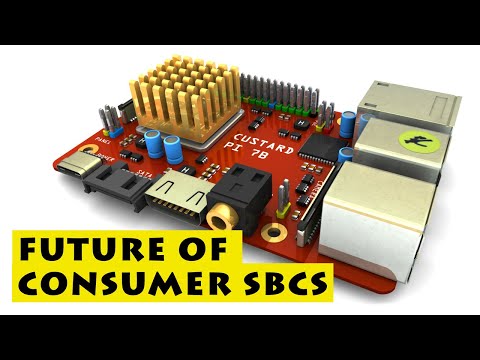
We need the Custard Pi from the intro to become a real thing.
@BikesbyBrad Says:
Teensy4.1 saves the day. Cost effective, ultra fast, plenty of RAM, and no OS bloat, just pure bare metal speed!
@kuhumbuwa Says:
🎉
@murraymadness4674 Says:
While the SBC or Pi's have increased prices and decreased availability, the Arduino microcontrollers keep getting bigger and better and faster. The new ESP32-S3 with 16mb can run almost any application and is $4 and being effectively a single chip solution, they can be produced in very large quantities. And they keep getting more powerful. One thing they can't do however, is hdmi video. Once they can do that, there will be no reason to use a pi or even sbc. In fact, if someone sold an add-on the gave it hdmi video, it would take over already. (btw, I just ordered a Le Potato since it claims 4k video support, $30) I'd also note that Arduino has not kept pace, its interface as its grown has become terrible and slow. Platform IO is where things are going.
@Praxibetel-Ix Says:
It took me almost a year to notice the special guest cameo made by Mr. Housefly on the bottom-right corner at 11:15-11:17 😂
@AverageUser- Says:
Yeah the price needs to be low to be worth a damn
@michaelbeetham2660 Says:
Raspberry Pi is an ecosystem which is based on proprietary technologies and masquerading as an open source friendly educational resource.
@jarkkov79 Says:
I don't know anything about economics, but today you can have 10y old computer, and in basic use, it can do anything you want: internet browsing, paying bill, using web apps... so in my point, there should be very cheap computers for just everyday use. microsoft is just pushing hardware limitation with their win 11 hardware needs, to sell new expensive hardware. today there should be $100 sbc, that does all the basic things, allthou EVERYBODY needs computer for daily basis, like smart phones. althou smart phones are newer than computer, and you can use smart phone as computer, if you want
@growleym504 Says:
The main desktop computer on my boat is a Pi 4B. My navigation computer is a 3B. A 4B with a couple of SSD or HD drives makes en excellent cheap file server. A Pi Zero W makes a great board for building a wireless security camera. These plain vanilla ARM boards will always be useful and punch well outside their weight class. Keeping the OS mean and lean is key to maintaining useful performance levels. I just watched a video on the new Sigma SBC that retails for $648 with a 500GB SSD. I can get a fairly capable laptop for that! The whole thing is getting out of control. If you make a SBC with true desktop power, it costs as much as a real desktop, and the unit is too big for a lot of maker projects. No real advantage. Now that the supply problems are sorted out, the Raspberry Pi is a great option for getting a lot of work done for very little money, with a device that is smaller than a pack of cigarettes. But an OS that is too busy and too resource hungry, cripples it.
@mcafalchio Says:
I am happy with my orangepi 5, I am using it as my desktop pc for less than 10w with 8 cores
@paulchamberlain7942 Says:
As a desktop user when I need or desire the performance, and as an arduino user when I want to code, without ever having dipped me toes into the SBC arena I believe can see from the outside the primary problems covered adequately in this video and the comments. It appears to me that the pebble muddying the waters here is addition of the fully desktop capable OS. Maybe the sinister saboteur in the room is the mouse. GUI become necessary to integrate the rodent into your life. Maybe the solution here is a standardized but bare-bones distro, or a simple RTOS, with excellent graphics and sound hardware support, on modest but perfectly usable hardware. In essence a return to the spirit of the 8 bit era without throwing away the advantages of progress. It is the simplified operating environment which is key to encouraging programming and hardware development, while the GUI environment is key for application users and their sinister rodents.
@jonathanstein6056 Says:
Bidenflation
@colinkeizer7353 Says:
Thanks for your assessment and summary of the SBC situation. I must admit, I'm one of the customers who owns several Pi 3 machines and a Pi 4, all of which I used for writing, internet and the Pi 4 is streaming something else right now while I type this comment in your YouTube channel. I never seem to get around to programming with them, which is sad. Of course, it's easy to wander off when I'm looking for BASIC, FORTRAN, MODULA and various flavors of C to play in . . . sigh. With Pi 5 over the horizon still, I purchased and setup a $79.00 UBUNTU tiny PC last week. By the time I added a mouse, keyboard and monitor, I'd purchased it twice, and I will soon spend a bit more when I put a micro SD into it. Hope it works out well as a writing machine, and maybe I'll have some luck programming with it. Ha.
@Oktokolo Says:
At this point it would be waaaaaaaaaaaaaaaaaaaaaaaaaaaaaay more environmentally friendly if old Android phones could just get another life as SBCs. There would be no point in manufacturing a new SBC for low cost desktop or maker use if you could just get a used phone and use it as an SBC.
@UnCoolDad Says:
Original raspberry pi had 256MB. I still have several and they are still running.
@garrytuohy9267 Says:
I expect the SBC Market to become more fragmented as different manufacturers specialize in different areas, in response to enchrochement from Mini-PCs (especially fanless) capturing the more general Users and the MCUs capturing more of the Maker market. The day may come when every SBC comes with a DIN Rail connector.
@BacchiosCorax Says:
I personally belong in the category of those who seek a low cost small computer. Nowadays SBCs are not the only (or even the best) option for this category, as mini-PCs are getting cheaper, more popular and more powerful. However, I have a few expectations from a mini-PC. It has to be small, low powered, be able to use Linux and other open source software and be able to be easily opened to be repaired or even tinkered with if need be. Obviously not every machine offers these.
@stand355 Says:
If you don't need GPIO, N100 mini PCs are a great inexpensive alternative that is much faster. Their TDP about the same as the Pi 4, which makes fanless operation feasible even at full load.
@catsupchutney Says:
For fighting bloat, try BSD.
@mikem9536 Says:
Pi bubble is over because you can get Pi performance out of many old "junk" laptops. (Why buy a Pi, when Ubuntu Mate works fine on a Windows 7 laptop)
@JasonBurchell76 Says:
With all the opened source hardware out there, if you were to produce something you’d like based on those open source sbc designs, I don’t think you’d ever have to bother worrying about future revenue streams , ever again.
@pd8559 Says:
Pi was an SBC with GPIO pins taken from the microcontroller space to give people something faster and more capable than microcontrollers back in the day but still be able to plug in their sensors, motors and toys from their microcontroller projects. But eight years ago the ESP32 was released which in the microcontroller hobbyist space was practically a beast and came with all the WiFi and Bluetooth connectivity built in that a maker would want for any project. Now that Raspberry Pi is priced as much or higher than small for factor PCs the Pi has been caught out with it's pants down. The x86 PC eats the Pi's lunch in processing power and even at low wattages with the right x86 chip. The ESP32 eats the Pi's lunch in terms of having a beast of a microcontroller to interface with every makers toy box and do whatever the maker wants. In other words Raspberry Pi has become the worst value proposition in the current marketplace. Not a very good place for Raspberry Pi to sit in and if they don't fix it I think we will soon have Raspberry Pi in the history books. Who needs a slow expensive Pi when you can buy both an ESP32 AND a refurbished SFF business PC and have those two talk to each other over Wi-Fi, Bluetooth or whatever wire-based interface and do everything so much better than the Raspberry Pi SBC at the same or less price point. Keep in mind ESP32 and x86 had no supply chain interruptions or the same level of price gouging as Raspberry Pi's did during the pandemic years.
@zyxyuv1650 Says:
Raspberry Pi lost cultural relevance in the past couple years. People were able to wait for years and RPI could have bounced back, but after waiting for MORE than a few years, they moved on to other platforms and realized they're far superior to RPI. I know a lot of nerdy type people and nobody's really using RPI for anything anymore.
@zorintoto1167 Says:
Companies are buying them in droves for industrial purposes leaving nothing for the average consumer . The entire concept of pi was for people that couldn't afford computers , clearly their vision has changed and they have become greedy
@petrslansky6659 Says:
Manufactures of Android TV boxes totally missed an opportunity to attract SBC users those wanted to use SBC as low cost/low power desktop PC. An example, Beelink X2 with ARM H3 CPU was selling for better price than Orange PC, that was just a bare board but Beelink had nice case and power supply was included; Bellink X2 was even supported by Armbian but that support vanished, I assume that was because there was no help from Beelink side. Android TV boxes could be great device to run Octoprint or Klipper, to control 3D printer but they do not support Linux, so they are mostly ignored...
@jacoblami1731 Says:
I'm not saying I have proof that Explaining Computers and Scotty Kilmer are the same guy I just know it's true.
@louie3209 Says:
Due to the rpi shortage, like many others I've been searching for sbc alternatives. I've tested all the libre sbcs. I really like the frite and renegade as they serve a niche space. All the libre boards I've tested support emmc, this is fantastic! My favorite arm based sbc is the orange pi 5 plus. No surprise 😂
@mat314159mat Says:
Just got myself a Le Potato, good enough and at the original raspberry price (40€)
@fattomandeibu Says:
If you look used you can find those small "thin client" PCs as they call them for as low as £25 for older Celeron or Atom based systems . They're useful for basic home projects such as NAS, retro game emulation and many other applications you'd use a Pi for. I wouldn't suggest it for a desktop PC, myself, but if you were only using office apps it would do.
@user540000 Says:
The only reason for me to buy an SBC, would be to run images that are all prebuilt and easily "burned" or for something that is running all the time like a piHole. I couldnt imagine trying to use it as a daily general computer and it shouldnt try to be, an older x86 makes way more sense and the power draw is no big deal because 90% of the time it will be off or in sleep mode for a general computer at home. I would also rather have an actual raspberry pi for the support. I dont care if rival brand is 30% faster if I have to compile everything from scratch for it I might as well just get an x86 machine that would have way more support and be way more faster.
@Builtbypete Says:
Performance per watt and form factor is what interests me. The Pi does well in both departments.
@seppomuppit Says:
A good idea for a video. I've been thinking this way for a long while now. The raspberry pi just doesn't make financial sense any more, and the 4B being released in 2019, it's actually starting to look extremely dated as well. x86 pentiums like the NUC 11 essential run rings around it.
@YTFP_Chris Says:
I think you are spot on with your assessment. I had wondered why my Pi 3 units were preforming so dismal compared to how they used to. The pi 1 models are a hidden gem, without modification (LED removeal etc.) it idles at 80ma ! I too am moving to microcontrollers simply for the ability to just cut power, with zero data loss, that fact alone makes me choose a microcontroller over a raspberry pi zero in which bloat is making it darn near useless in most situations. Many Pi zero wireless and bluetooth capabilities can be replaced by a simple esp32. Bloat, cost, the long duration of unavailability have pretty much killed the Raspberry Pi ecosystem for me. These SBC are widely available now and stock is up (July 2023) but I fear they won't sell very many. The combinations of Raspberry Pi burnout, the thrill of finding one being available being quenched (the hunt is over), the extremely unlikely but possible release of a raspberry pi 5, and people moving on to less bloated, lower power, and more stable product unavailability will put the raspberry pi foundation in a situation where they spent a lot of money to get stock, only to find that no one even really wants them.
@susand9881 Says:
With the latest purchases, what made me move away from the Pi4 is (apart from availability!) the storage... A microSD card is perfectly fine for a Pi Zero but for a Pi4, it's simply unacceptable in this day and age. Yeah, it kinda works and you can have USB storage added but surely, they could do better and some alternative SBCs do, albeit at a high price. I think the Pi5 will be make and break for the platform so they'd better get it right and also, not sit on the design for too long before releasing it. The Pi platform was/is amazing and people flocked to it but we can also move on just as quickly if there is a better alternative.
@BokoMoko65 Says:
What do you think about the feasibility of a open source neuromorphic processor/board that could be daisy-chained or bus shared in a easy way?
@chas2077 Says:
First of all thanks for the benefit of your brilliant insight to make a very interesting and informative video. I was particularly drawn to the reference to “Has the Pi bubble burst?” in the title. Well I hate to say it but to be honest I think it’s about time that it did. As a Raspberry Pi fan from day one I’ve purchased probably every variant produced to this day (on the odd occasions that they were actually in stock of course). I’ve always been frustrated by the virtually always “out of stock” and even in some cases the ridiculous rationing of the main products. Imagine any other business model that says we’ll only allow you to buy our products if you’ve been a very good boy and only ordered one. And of course pay the full three quid postage cost for each and every tiny item. I’ve sometimes wondered why I even bother to carry on trying to buy them when you look at much more capable and cheaper competition that are always available and easy to buy but it always comes back to “well yeah but the Pi has such a great “ecosystem” and is much better supported by the “community” etc. etc.” Indeed this is true but we should all be very aware that this “ecosystem” and the support it provides has been built not by the RP Foundation themselves but by the users – the so called “makers”. It’s this group of people that has made the Pi the great success that it is despite the Raspberry Pi foundation failing in many respects to support them not least in being able to supply the damn things. But despite this bizarre business model we still rave abut the products and turn a blind eye to superior competitive products. I’ve been guilty of it myself saying stuff like “oh well, they may be impossible to get hold of and the SD card socket is awful and it still only has a 32bit OS and no on/off switch etc. etc. etc. but they are the best supported and we still love them” What finished me however is that when things got really bad and COVID followed by chip shortages and a plethora of other supply problems came along who did they support? The educational and maker communities, for whom the products were supposed to be for in the first place, the people that created their wonderful “ecosystem” and made them what they are? NO. The lovely Eben Upton threw them all under the proverbial bus and instead supported his “corporate” customers, i.e. lazy cheapskate companies profiteering by charging for perceived high value goods incorporating low-cost off-the-shelf hobby SBCs meant for educational use inside them rather than doing their own R&D. And leaving his loyal core customers having to sit through lockdown either with nothing or at the mercy of eBay scalpers cleaning up by selling the surplus stock at insanely inflated prices. Good call Eben! Now nearly three years later when they are finally beginning to have some stock to spare they come back to us and say “hey guys you’re really so lucky now because we’ve decided that we can finally let you have some of our stuff again”. Well I say you can shove it up your proverbial Eben. I’ve had no choice but to move on and now I have no reason to come back again. What goes around comes around. How about if we have a go at actually bursting that bubble and divert our efforts into creating an Orange Pi “ecosystem” instead?
@ReptilianLepton Says:
Guess I'm in your second category... was recently pricing out a couple projects, and off-lease Dell or HP X86-64 thin clients with Atom, Celeron, or Pentium processors, can currently be had for $25-50 from resellers. There's nothing special locking you into the thin OSes they originally came with and they can readily run any Linux distro you please.
@kiodiekin Says:
Great video you’ve touched on a few things we’ve knows for awhile in regards to gaming and lack of drivers
@rickhunt3183 Says:
You totally nailed it classifying the type of people buying an SBC. Pi isn't going anywhere. There are plenty of options that are technically better. The Nvidia Jetson is a good example, however. Economics is the one driving force for everything you'll ever want to do. The Pi might not be the toughest dog on the blog, but when the Pi foundation sneezes, everyone else catches a cold. I think the Pi Pico with wifi is going to surpass all the SBC as far as being the most popular to use in projects. One of the biggest weaknesses in using a SBC in a control application is the additional layer of an OS. This adds another layer of complexity to the design and increases the chance of having a fault. Running a single or multiple application that directly address the hardware, and using a technique called supper looping will probably surpass applications requiring a multilayered programing environment. The pi pico can give you the best of both worlds within its limitations. I think the regular raspberry pi is going to be good option for at least the next 10 years, if the company remains stable. As Windows can run on different hardware, Raspbian should be Multiplatform between clone manufacturers. That probably won't happen because once a better platform is out there people will dump the Pi hardware and move to new hardware. Imagine what it would happen if the Orange Pi, or banana Pi foundation built a much better SBC that was cheaper, but had the ability to run the Raspberry Pi OS.
@davidson46100 Says:
I thought the original purpose of those units was for educating the next generation of engineers and programmers. As long as that need is being met everything else is irrelevant.
@9a3eedi Says:
I have used a microcontroller for a recent project. There's so much you can do even with a 44MHz Cortex-M3. You can run an RTOS in it and get basic features that any OS can give you, like threads, queues etc. Programming on them isn't too difficult. The program starts instantly without delay, and isn't not affected by random delays from other programs in the background. I think it's a great environment to have even if it's a bit low level. I have seen a lot of projects use raspberry Pis to do basic things when they really should be using microcontrollers instead, it'll give them a lot better boot times, responsiveness and battery life among other things
@9a3eedi Says:
Imagine what the world would be like if software didn't get so bloated. We could still get the same responsive performance we'd be getting on today's hardware, but on extremely efficient (5 nanometer) single core low clock rate cpus. I still wonder why smartwatches need quadcore processors and gigabytes of RAM when all they need to do is tell the time and give you some basic functionality. If their software wasn't so bloated maybe we could've gotten more than a day of battery life
@pubdigitalix Says:
Why will Linux support for 32 bits be discontinued? And what relationship does it have with the needed 4 Gb of RAM?
@kloakovalimonada Says:
Many intel mini pcs draw same or less energy than a Rpi4
@NightOwlAmbient Says:
I just got the new Unihiker from DFRobot this week, and it's running Debian with a ARM Cortex A35 quad core 1.2 ghz CPU, 16 GB of storage, and 512 MB of ram. It has 4 stemma connectors, usb 2, 2.4 Ghz wifi, Bluetooth 4, an accelerometer, a gyroscope. a microphone for picking up sound, a micro:bit edge connector, and a 2.4" touchscreen. All for $80. I got it to teach my grandson some basic programming because it supports multiple ways to program in Python - not micro Python. You can program it either by connecting a USB cable to your computer or via wifi. It also has its own web server and MQTT server built in - because it is running a full OS. Pretty much everything one would need is on this little computer.
@eclypse3d Says:
PI orchestrated the market....
@LKattest Says:
The end of raspberry pi and equivalent is near. Mini pc's are there for the price of a raspberry pi. I've had enough of waiting for the SBC if their priority is with the industry and not the consumer, they sell their sole
@jeffspaulding9834 Says:
I seriously doubt the Linux kernel will ever drop 32-bit support completely. It will likely drop 32-bit x86 support at some point (although probably not for several years), but that's not the same thing. Most of the things in this video - browsing the web, streaming video, word processing, etc. - seem to be aimed at people who just want a desktop the size of a credit card. For those people, yeah, they're better off with mini-pcs. But you don't need gigs of RAM to control a conveyor belt, poll Modbus devices, log serial data, control machinery, etc. Industrial users will keep the 32 bit world alive for the foreseeable future. My current project started with a Raspberry Pi 3 I had laying around. The project now runs on a pair of virtual machines on a couple servers, but the task it performs - receiving signals from fire and security panels and pushing the data into a database for the SCADA system to access - could still easily be done even on an original Raspberry Pi.

More Programing Videos